A Room to Breathe: The Quiet Upgrade Every Hall Event Deserves
At a wedding ceilidh last month, I watched a small boy press his hands over his ears and rock gently against the wall. The band was brilliant. The room was loud. His mum was doing that familiar dance between not wanting to leave and not wanting him to be overwhelmed. A quiet room would not have fixed everything, but it would have given them somewhere to land.
That is the case for a calm room in a hall like ours. Not a medical tent. Not a creche. Not a VIP lounge. Just a door that closes, a lamp that is not flickering, and permission to step out without a story.
The five-minute room that changes the night
At Corrie Hall, we have learned that the best events are not the ones where everyone stays until the last song. They are the ones where people feel able to stay as long as suits them. A quiet room is a pressure valve. It lets a guest who is close to leaving take twenty minutes, drink some water, sit somewhere soft and come back. Or not come back. Both are fine.
This matters for weddings, birthday parties and live shows in exactly the same way. A disco, a ceilidh, a comedy night, a christening buffet — all of them stack up noise, lighting, crowds, queues and expectations. For neurodivergent guests, including autistic people and people with ADHD or sensory processing differences, that stack can tip over quickly. The same is true for people with anxiety, migraines, hearing aids, small children, tired older relatives and anyone who has simply had enough of the raffle.
Why older halls need this more, not less
Village halls and community venues are wonderful precisely because they are not sleek conference centres. They are also echoing boxes with strip lights, scrapey chairs, a urn that whistles and a bar queue that curls past the speakers. That is part of the charm. It is also part of the sensory load.
Adding a calm room is not a criticism of the building. It is a practical upgrade, like putting a sign on the loo or a mat by the door. It says: we have thought about the whole room, not just the dance floor. And organisers usually find it makes the night calmer overall. Fewer guests quietly melting down in the car park. Fewer early exits. More people able to enjoy the bit they came for.
Pick the right spot, not the prettiest one
The best quiet room is often the least glamorous: a vestry, a committee room, a side office, a cloakroom that is bigger than it looks. It needs a door that closes and a bit of distance from the main speakers, the bar and the kitchen. It should not be a corridor. It should not be the route to the toilets. It should not be locked.
If your hall only has one big room, look for an alcove or a screened corner away from the sound desk. A curtain is not a wall, but it is better than nothing. Make sure the room is on the ground floor if possible, and that the path to it is clear. This is not just about access; it is about a guest being able to find it without having to ask three people and explain why.
Soft light, soft furnishing, soft rules
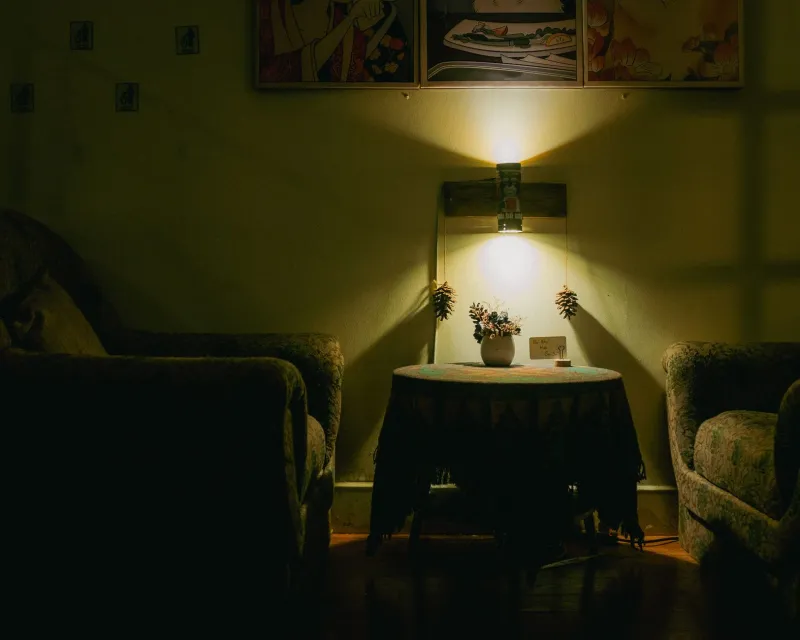
You do not need a makeover. You need the overhead fluorescent lights off and a couple of lamps on. Borrow floor lamps from the committee. Dig out the fairy lights. Check that nothing flickers or buzzes. If the room has a dimmer, use it. If it does not, angle the lamps away from seating so nobody is staring into a bulb.
Comfort matters more than colour schemes. Put out the comfy chairs rather than the stacking ones. Add cushions, throws and a rug if you have them; charity shops and community donations are your friends. A rug also takes the echo down a notch. Keep water, tissues and a charging point in the room. A small basket of earplugs, fidget toys and colouring pencils is a nice touch, but it is not essential. The essential things are quiet, warmth and somewhere to sit that does not feel like a waiting room.
Keep smells gentle. Avoid strong air fresheners, scented candles and cleaning sprays just before the event. Make sure the room is ventilated without being freezing. Put up a small sign asking people to keep phones on silent and voices low. Quiet does not have to mean silent; it means nobody has to perform being fine.
Sign it, say it, normalise it
A quiet room that nobody knows about is just a spare room. Make A3 signs with arrows from the main hall, the entrance and the toilets. Use plain words and simple icons. Call it the Quiet Room or the Calm Room. Put it on the website, the order of service, the event programme and the social post. Say it out loud at the start: the quiet room is open all evening, no need to ask, no need to explain.
Brief your stewards, volunteers and bar staff. The room should not be treated as a naughty corner or a creche. It is not a behaviour management tool. It is a shared space for anyone who needs a break. If a guest asks where it is, they should get a straightforward answer and a point in the right direction, not a raised eyebrow.
Predictability is a form of welcome
Neurodivergent guests often find uncertainty harder than noise. A running order on a chalkboard is a small thing that makes a big difference. So is a ten-minute warning before the speeches, the ceilidh, the disco, the raffle or the soundcheck. For live shows, publish set times. For weddings, share the timeline. For parties, tell people when the cake is coming out.
You do not need a printed programme for every guest. A whiteboard by the door and a couple of announcements will do. The point is to remove the low-level question of what happens next, so people can relax into what is happening now.
The no-pressure exit route
Every event should have an easy way out. Not a dramatic exit, not a walk past a hundred curious faces, just a side door and a clear route. Keep fire exits clear, obviously, but also think about the social exit. Tell guests they can step out whenever they need to and come back without explaining. For ticketed shows, make sure re-entry is allowed. For weddings, mention it to the couple so they can include it in their welcome. For parties, the host can say it in one sentence and then move on.
A calm room near a side entrance is ideal. A steward who knows where it is and is not going to interrogate anyone is even better. This is not about wrapping guests in cotton wool. It is about making the room easier to be in.
A small budget, a big return
You can set up a decent quiet room for under £50. Signs and laminating, a few earplugs, a water jug, some tissues and a basket of cheap fidget toys will cover most of it. Borrow lamps and cushions. Ask the local library if they have spare rug samples. Put a note in the newsletter asking for donations of throws and board games. Check anything electrical is safe, and keep cables taped down.
The return is not just goodwill. It is a more inclusive event, a calmer organisers' table and a better reputation. In 2026, guests notice these things. They mention them in feedback. They come back to the hall that made their auntie feel comfortable, or their son feel able to stay for the first dance.
The room after the night
Keep a small notebook in the quiet room. Ask stewards how often it was used. If it was busy, invest in better seating. If nobody used it, check the signage and the announcements before you assume nobody needed it. The point is not to create a perfect sensory space. The point is to make a start, learn from it, and make the next gathering a little kinder.
A hall is at its best when it holds everyone, not just the loudest. A quiet room is one of the simplest ways to do that. It costs very little, takes up space you already have, and gives the whole event somewhere to breathe.