Warm Rooms, Big Sound: The Case for Winter Gigs in UK Halls
By late November 2026, the UK gig calendar has a familiar shape. The big tours are in arenas, the festive shows are warming up and the smaller venues are trying to persuade people to leave the house on a cold Tuesday. Too often, the argument is framed as a choice between scale and comfort. It is not. For winter live music, the smaller hall is not the compromise. It is the better night out.
This is not nostalgia for dusty floors and stackable chairs. It is a practical argument about sound, atmosphere and the kind of cultural infrastructure that keeps a local music scene alive between the big events.
The big-room default is not the only option
Arenas have their place. A stadium act should feel like a stadium act. But winter amplifies every weak point of the huge room: the long walk from the station, the queue in the rain, the cavernous concourse, the sound that arrives a fraction late and the sense that you are watching the show through a letterbox. By the time the encore arrives, half the audience is thinking about the last train.
A UK hall asks something different of a gig. It asks the audience to be close, the promoter to be thoughtful and the artist to play the room rather than project over it. That is not a lesser experience. For folk, indie, jazz, comedy, spoken word and the stranger corners of electronic music, it is often the only way the night really lands.
What intimacy actually buys you
Halls have a natural advantage that no amount of arena production can fake. The sound has fewer places to go. A decent acoustic set in a hall with a sensible PA can feel like a conversation. Sightlines are simpler. The bar is usually closer. The audience can see each other, which matters more than promoters sometimes admit. A room full of people who can sense each other listening is a room that behaves differently.
There is also the matter of the artist. A performer who can hear the back of the room without fighting a delay tower will play differently. They will tell stories, take requests, notice the front row. That is not a small thing. It is the reason many musicians still talk about hall shows years later.
The practical case: booking the room
Promoters who want to make late-2026 hall shows work need to start with the building, not the poster. Village halls, community centres, church halls, miners' welfare institutes and small Corn Exchanges are not interchangeable. Ask about capacity, stage size, load-in access, power, licensing, insurance and curfew before you fall in love with a date. Speak to the hall committee early and treat them as partners rather than landlords. A good relationship with a trustee can solve problems that a contract cannot.
Check whether the hall has a premises licence or whether you need a temporary event notice. Confirm PRS and PPL requirements. Ask about accessibility, parking and public transport links. Build in time for a site visit at the same hour as the show, because a room that feels charming at 2pm can feel very different at 8pm.
Heating without frying the atmosphere
Winter halls are not cold by accident. Many are old, draughty and expensive to heat. The answer is not to blast the radiators until the front row falls asleep. Agree a heating schedule with the hall, pre-heat the room before doors, and manage draughts at entrances with signs, screens or a cloakroom. Ask where the thermostat is and who controls it. Keep the bar queue away from the main doors. If the hall has high ceilings, expect warm air to sit above the audience rather than around them.
Tell ticket-holders to bring a layer. It sounds obvious, but it helps. A hall gig in November is not a beach party. The audience will forgive a slightly cool room if the welcome is warm and the music is good. They will not forgive a two-hour wait in a cold corridor with no information.
Designing the audience experience
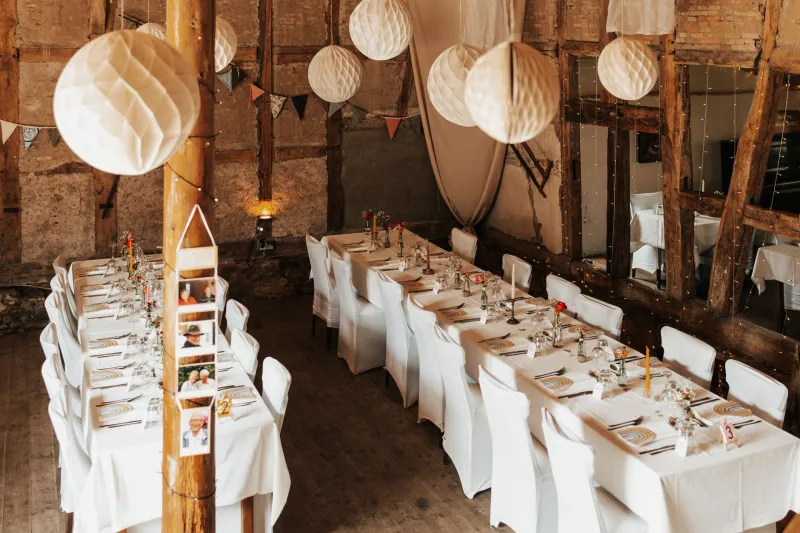
A hall gig lives or dies on the last hundred metres. Clear signage from the street, a lit entrance, a proper cloakroom and a bar that does not create a wall of people in the sightline all matter. Decide whether you want seated rows, cabaret tables or a standing floor, and be honest about what the room can hold. Do not oversell. A comfortable 180 is better than a cramped 250.
Give people a quiet corner if they need one. Make sure the accessible toilet is open and clearly signed. Put the set times online and at the door. If the last train is early, say so. If there is a local bus, mention it. These are small details, but they are the difference between a night that feels cared for and one that feels like a school disco with better lighting.
A cultural argument, not just a cosy one
Halls are part of the UK live scene's foundations. They are where touring artists cut their teeth, where local promoters learn their craft and where audiences discover music without paying a booking fee that costs more than the ticket. They are also community buildings in the fullest sense: polling stations, playgroups, birthday parties, wakes, weddings and gigs. Keeping them busy in winter is not just a nice idea. It keeps the whole local ecosystem ticking.
Late November is not a dead zone. It is a test. If a hall show can pull a crowd on a wet Thursday in 2026, it can do it again in February. Promoters who build those audiences now will have a venue that trusts them, a community that knows them and a calendar that does not depend on the arena circuit.
The best winter gigs are not the biggest. They are the ones where you leave with warm hands, ringing ears and the feeling that you were in the room, not just at the event. That is what a UK hall does better than almost anywhere else.