Arrivals First: Making the Walk to Your Hall Feel Like the Invitation
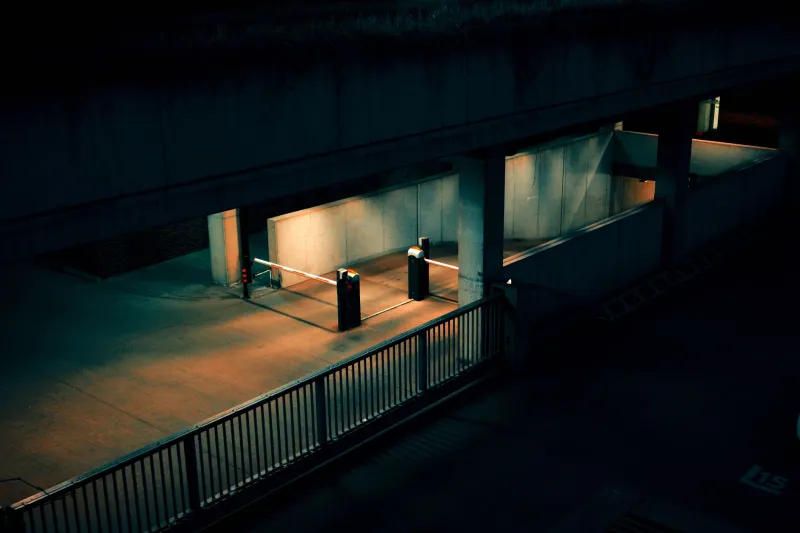
There is a moment, about ninety seconds long, that decides how a hall feels. It happens outdoors, in the dark, usually in the rain, and nobody on the organising committee ever puts it on the running order. It is the walk from the car to the door.
Ask anyone who has arrived at a village hall on a Friday night in November — headlights sweeping a gravel patch, a hedge, a wheelie bin, a distant rectangle of light that may or may not be the entrance — and they will tell you the truth. The event began before the event began. And if that first minute felt muddled, the room has to work twice as hard to win them back.
None of this requires a budget. It requires somebody to walk the route themselves, in the dark, in bad weather, with the eyes of a stranger.
The bit everyone forgets to rehearse
Committees rehearse the seating plan, the raffle, the sound check, the order of the cake. Nobody rehearses the approach. Yet the approach is where guests make their judgements: is this the right place, will I feel silly, where do I put the car, is that someone I know, am I about to walk into the wrong room.
That is a lot of small anxieties to heap on a person in a coat. Good arrivals work by quietly answering questions before they are asked — so the guest's mind is free for the thing they actually came for.
The test is simple. Come back at the hour your doors open, park where a guest would park, and walk in. Bring a torch and a notebook. Most halls discover three problems in ten minutes and fix two of them with a laminator.
Signage that still works after dark
Permanent hall signs are usually placed for the benefit of the postman and the planning officer, not a wedding guest arriving at dusk. Temporary signage fills the gap, and the rules for it are blessedly few:
- Height matters more than size. A4 laminated at knee level is invisible next to a car. Aim for chest height on a stake or a fence post.
- Say the thing, not the acronym. "Wedding reception — this way" beats "C.H. Function".
- Contrast beats decoration. Dark text on a pale background, or the reverse. Bunting-coloured swirls disappear at 5pm in February.
- Place them at the decision points, not at the venue. The junction, the fork in the lane, the corner where the satnav gives up.
- One arrow, not three. A sign that offers options is a sign that has given up.
If you are putting anything on or near the public highway, check with your local highways authority first — rules vary by council, and enforcement officers have long memories. For everything on private land, ask the landowner, then get the laminator out.
Parking is a social skill
Parking is where the politeness of a community gets tested. There is never quite enough, and there is always someone who arrives early and parks exactly where the caterer needs to reverse at half past six.
A few things that keep the peace:
- Draw the plan. Even a hand-drawn map on the back of the booking sheet is better than nothing. Mark bays, the accessible spaces, the caterer's route, and the spot reserved for the band's van.
- Reserve the near spaces for those who need them, and say so on a sign. "Accessible parking" in polite lettering works better than a traffic cone and a scowl.
- Keep the turning circle clear. Catering vans, minibuses and the ambulance that everybody hopes will not be needed all need room to swing.
- Never cone off a neighbour's frontage, even in desperation. Community halls survive on goodwill, and goodwill is a finite resource.
- Put someone in a hi-vis for the busy twenty minutes. Not to police anyone — just to point, smile and wave.
If the overflow is a muddy field, mention it in the joining instructions. Guests will forgive a field. They will not forgive discovering it themselves in heeled shoes.
The doorstep is a destination
Somewhere between the last parking space and the front door, guests need three things: light, a dry surface and a face.
Light first. Older halls are often lit by a single bulkhead lamp above a door that a Victorian builder put exactly where it would illuminate the least amount of path. Solar stake lights cost very little and transform a walk; a bucket of torches by the entrance, borrowed back at the end of the night, does the rest. Check the route for trip hazards you have stopped seeing: the raised kerb, the cracked slab, the drain cover that sits an inch proud.
Surfaces next. Gravel and wet leaves are a poor combination underfoot, and a swept path tells guests somebody thought about them. A stiff broom, ten minutes, and a mat inside the door that is actually big enough to be useful.
Then the face. A greeter at the threshold — not a bouncer, not a ticket inspector, just a person who says hello and points at the cloakroom — is the single cheapest upgrade available to any hall in the country. Rotate the job. Give the volunteer a warm coat, a torch and permission to be brief.
Plan for the weather, not the brochure
The photographs on the hall's website were taken in June. The event is in November. Somewhere between those two facts sits a laminated contingency plan nobody reads.
Write the wet-weather route down before you need it: which door, which mat, where the wet coats go, who sweeps, who moves the sign inside. And do the same for the dark — a simple line in the guest email saying "the lane has no streetlights, bring a torch or follow the lanterns" removes a genuine worry for anyone arriving alone.
It is also worth telling guests where the buggy and wheelchair route runs, and testing it yourself. A step-free entrance is only step-free if the path to it is level, lit and wide enough to actually use.
Ninety seconds, well spent
A hall cannot change its tarmac or its postcode. It can change what a guest meets on the way in: an arrow that points the right way, a space near the door for someone who needs it, a lit path, a swept step, and a person who looks pleased to see them.
That is the whole trick. The welcome does not start when the door opens. It starts where the headlights stop — and everything after it is easier when the first ninety seconds have already done their job.