What the Hire Fee Leaves Out: The Real Cost of a Bring-Your-Own Hall Wedding
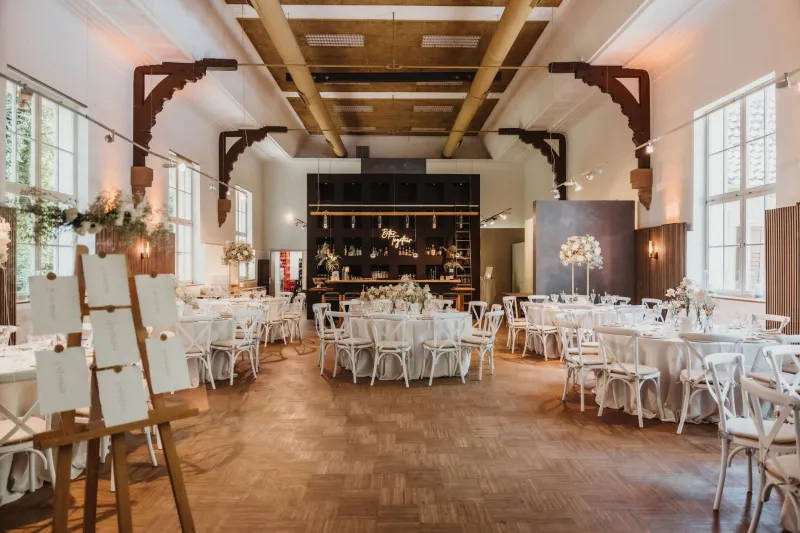
There's a particular kind of magic to a dry-hire hall. You get the keys, the bare floorboards and the freedom to build the day you actually want — no set menus, no preferred supplier list, no venue coordinator hovering by the cake table. It's the approach a growing number of UK couples are taking, and it's easy to see why. A village hall or community space can cost a fraction of a hotel package, and the photographs look like something out of a Sunday supplement.
But dry hire is a bit like buying a flat with no kitchen. The price on the listing is real, and so is the work ahead. If you're weighing up a bring-your-own venue, it pays to know exactly what you're taking on before the deposit leaves your account.
First, what "dry hire" actually means
In plain terms, dry hire means you're renting the building — not the staff, the bar, the crockery or the catering. Some venues offer a slightly warmer version: tables and chairs included, a basic kitchen, maybe a caretaker on site. Others hand you a set of keys and a bin bag and wish you well.
Neither approach is wrong, but the gap between them is enormous when you start pricing things up. A hall that looks £800 cheaper on paper can easily cost £2,000 more once you've brought in everything it doesn't provide.
The hire fee is the smallest number on the page
This is the bit that catches people out. A dry-hire wedding isn't expensive because of the hire fee — it's expensive because of everything the hire fee doesn't cover. Think of the fee as the entry ticket, not the whole evening out.
The usual suspects on a dry-hire budget:
- Furniture — trestle tables, chairs, linen, glassware, cutlery
- Catering — either a mobile caterer or a full kitchen crew, plus equipment
- Bar — stock, staff, glassware, ice, a licence if the venue doesn't have one
- Staffing — bar staff, waiting staff, a steward, sometimes security
- Insurance — public liability and event cover, often required by the venue
- Cleaning — either your own team or a paid cleaner, plus waste removal
- Licences — a Temporary Event Notice (TEN) if alcohol or late music is involved
- Utilities — some halls charge extra for heating, power or water
Add those together and the gulf between a dry-hire hall and a fully serviced venue narrows considerably. It doesn't disappear — dry hire still wins on flexibility and often on cost — but the honest comparison is rarely the one on the first quote.
Insurance: the dull paragraph that matters
Most halls will ask you to provide public liability insurance covering the event. It's usually inexpensive — a short-term policy for a one-day wedding often comes in under £100 — but it is not optional, and it needs to be arranged before the day, not on the morning.
Read the venue's own policy too. Some halls carry insurance that covers the building but not your guests, your suppliers or your bouncy castle. If a supplier damages a floor or a guest trips on a cable, you want to know who's picking up the bill. The answer is usually you, which is exactly why the cover exists.
The kitchen question
A domestic-style kitchen with a sink, a kettle and a domestic oven is not the same as a commercial kitchen. If you're bringing in a caterer, ask them early what they need — prep space, fridge capacity, power for hot boxes, a separate hand-wash sink. Some caterers will turn down a job if the kitchen can't keep up, and the ones who say yes may charge more for the workaround.
If you're doing the food yourselves, be realistic about the faff. Feeding 80 people from a hall kitchen is a lovely idea in January and a stressful one in July. Factor in the cost of hiring in chafing dishes, urns, fridges and possibly a second pair of hands.
Bar, booze and the licensing jigsaw
A dry-hire hall often doesn't have a premises licence for alcohol. That means either a Temporary Event Notice from the council or a caterer who holds their own licence and can sell drinks on your behalf. TENs are relatively cheap and straightforward, but they have limits on numbers and hours, and they need to be lodged in good time.
Then there's corkage. Some venues charge it if you bring your own wine; some don't allow it at all. A bring-your-own bar can save a fortune, but only if you've done the sums on stock, glass hire, ice, staff and the possibility of a lot of half-finished bottles going home in the boot.
Cleanup, waste and the morning after
Hire agreements usually specify the state the hall must be left in, and many hold back a damage or cleaning deposit until it's checked. That's fair enough — but it means someone has to be on bin duty at midnight and back at 8am with a mop.
Ask the venue three questions before you sign: what time does the room need to be cleared by, where does the rubbish go, and what does "clean" actually mean in their eyes? Some halls have a cleaner you can pay to handle it; some expect you to do it. Neither is wrong, but the cost of hiring a professional clean should be in your budget from the start.
Staffing: who's really running the room?
Even a relaxed, DIY-feel wedding needs a few people who know what they're doing. Bar staff, someone on the door, someone who can find the fuse box at 10pm. Some venues include a caretaker; many don't. If you're relying on friends, be honest about whether they'd rather be dancing or stacking chairs.
The venue's side of the ledger
For halls, dry hire is a genuine lifeline — it fills quiet weekends, brings in steady income and introduces the building to people who might come back for a quiz night or a Christmas fair. But the cheap-looking fee only works if it's priced to cover the extra wear and tear, the caretaker hours and the admin. A hall that undercharges for dry hire ends up subsidising other people's weddings with its own maintenance budget.
That's why the best dry-hire venues are candid about what's included and what isn't. The honest ones will hand you a list, not a shrug.
Before you sign
Ask for the full inclusions list in writing. Ask what previous hirers have forgotten. Ask what happens if it rains, if the power trips, if the band needs a bigger supply. Then build a budget that includes the boring bits — insurance, cleaning, waste, licences, staff.
Dry hire can be the best-value route to a wedding that feels like yours. It just isn't a shortcut. The fee is the start of the conversation, not the end of it.