Half-Lit and Fully Welcome: Putting On a Relaxed Show in Your Hall
Most halls know how to put on a loud night. A band, a bar, a bit of bunting and a room full of people who know the drill. But for some families, the usual gig is a wall of sound, hard lighting and an unspoken rule that everyone must sit still and stay until the end. A relaxed performance is not a show with the edges sanded off. It is the same show, with permission built in.
In 2026, more UK halls are waking up to this. The idea is simple: make small, practical changes so neurodivergent audiences, families with young children, people with sensory sensitivities and anyone who finds conventional theatre-going a challenge can walk in, settle, enjoy the night and leave without apology. The show still has to be good. The welcome has to be better.
Start With the Invitation, Not the Adjustments
Before you worry about dimmer switches and decibel meters, sort the pre-visit guide. This is a plain-English document, one or two sides of A4, that tells people exactly what to expect. Where the entrance is. What the room looks like. When the doors open. Whether there is a queue. Where the toilets are. What the show is about. When the interval falls. Where the chill-out space will be. And, crucially, that people can move around, make noise, leave and come back.
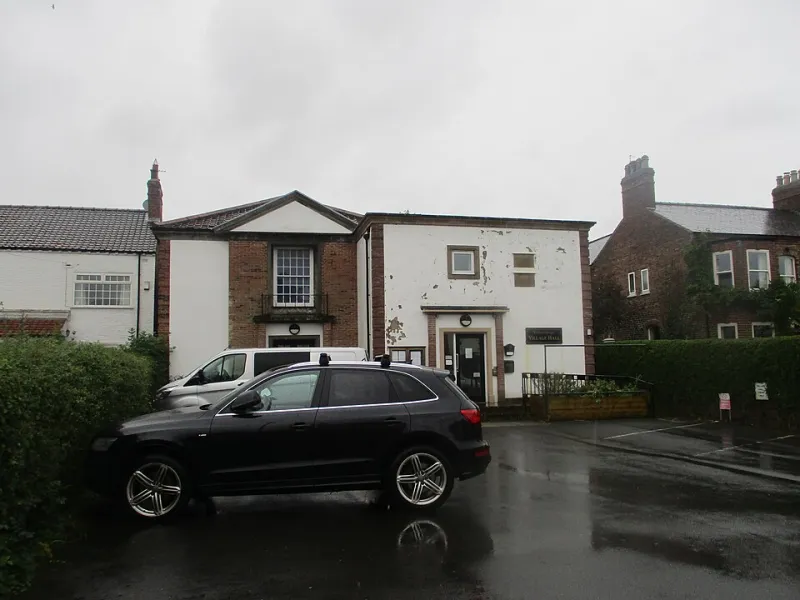
Use photographs of the actual hall, not a generic stock image. A picture of the front door, the ticket desk and the seating layout does more than a paragraph of reassurance. Share the guide through local schools, parent carer forums, disability groups and community Facebook pages. Do not rely on the phrase sensory-friendly to do all the work. Some people know it. Some do not. Spell it out.
The Room Does Half the Work
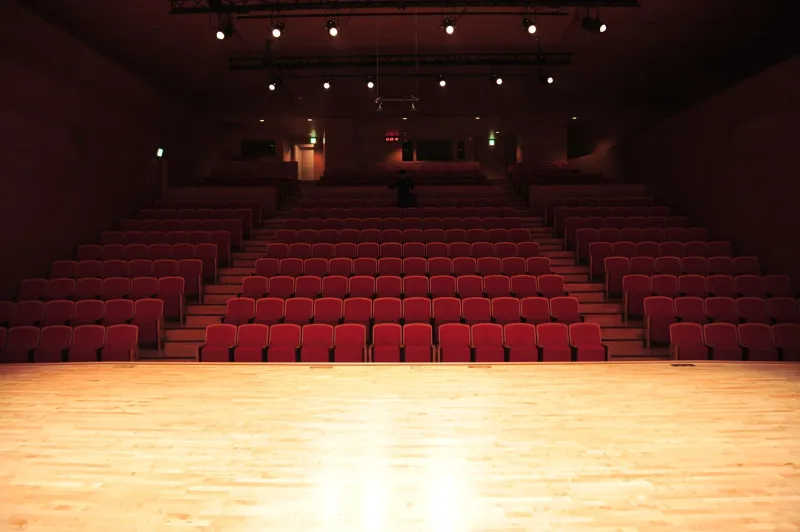
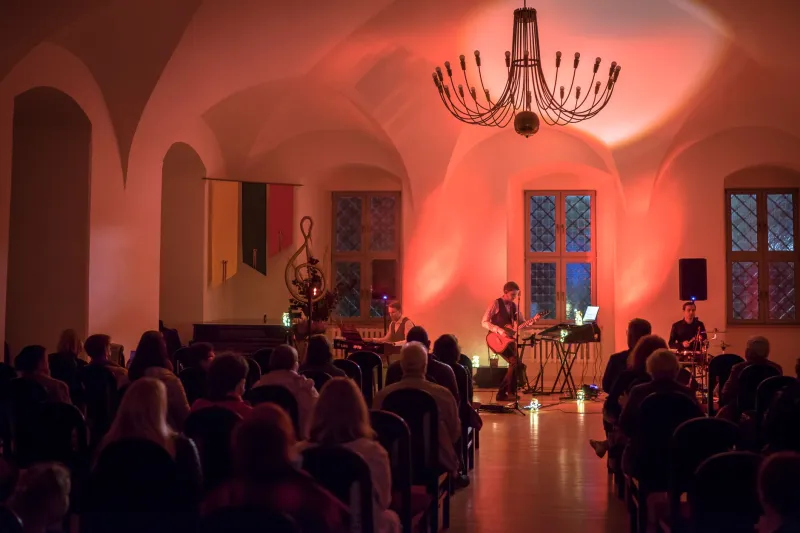
A relaxed performance begins with the lighting. House lights at around half up is the usual sweet spot: enough to see faces, find a bag, spot the exit and read a programme, but not so bright that the stage disappears. Avoid a full blackout. Keep the aisles clear and the seating flexible. Loose rows, a few chairs at the side, cushions or floor mats for children, and space at the back for anyone who would rather stand or sway.
Then there is sound. Agree a volume ceiling with the performer and sound engineer in advance. Something like 80 to 85 dB at the desk is a sensible starting point for many hall shows, checked with a meter rather than guessed by ear. Sudden bangs, sirens, feedback and loud stingers are the real enemies. Ask for them to be removed, softened or clearly signposted. Strobe lighting, haze and sharp blackouts should go too. If a lighting change is essential to the story, warn the audience beforehand.
Set up a chill-out space in a separate room, not a corridor. Dim lights, water, cushions, a few fidget toys, colouring sheets and a calm adult on hand. Make sure it is not a thoroughfare and that people can come and go without feeling watched. Sign it clearly from the auditorium. Where fire regulations allow, leave the auditorium doors open with a steward nearby so nobody feels trapped.
Briefing Performers Without Blunting the Show
This is where relaxed performances can go wrong. Well-meaning organisers sometimes ask performers to tone everything down until the night loses its spark. That is not the point. Ask them to keep the energy, the jokes and the material. Ask them to adapt the delivery.
Explain that audience noise is welcome. Movement is welcome. People may leave and return. The performer should not single anyone out or ask the room to hush. A simple welcome from the host works better than a list of rules: you are welcome to move, make noise, take a break and come back whenever you need. No pressure to join in. No pressure to stay seated.
Volunteers need a short briefing too. One calm point person on the door, one steward near the chill-out space and one floating helper is often enough. Tell them to offer help rather than hover. A quiet question at the entrance — do you know where you are sitting? — is friendlier than a clipboard and a pointed finger. If someone needs to leave midway, let them. A relaxed show is not a test of stamina.
A Running Order That Leaves Room
Keep the whole event tight and early. A 75 to 90 minute evening, including a break, usually works well for families and for anyone who finds long events draining. Here is a sample running order for a hall with a 7pm start.
- 6:00pm Doors open. House lights up. Gentle playlist. Chill-out space open.
- 6:25pm Welcome from the host. Two minutes. Explain the relaxed arrangements without making a performance of it.
- 6:30pm First set. Around 25 minutes.
- 6:55pm Interval. Twenty minutes. Tea, cake, squash. Chill-out space staffed.
- 7:15pm Second set. Around 25 minutes.
- 7:45pm Short wrap-up and thanks. Ten minutes maximum.
- 8:00pm Finish. Lights up. Quiet exit announced.
That structure gives people a predictable shape without making the night feel like a school assembly. If the show is for younger children, start earlier. If it is a music gig, keep the sets short and the breaks clear. The running order should be in the pre-visit guide so nobody has to guess.
Ticket Pricing That Pays Its Way
There is a temptation to make relaxed performances free, as if accessibility and commerce cannot share a room. Resist it. Free tickets can undermine the value of the event and make budgeting impossible. Price it like a proper night out, with concessions that make sense.
A workable model for a hall show might be £8 to £12 for adults, £4 to £6 for children, and £20 to £25 for a family ticket. Offer a free companion ticket for anyone who needs one. Keep the refund policy generous, because life happens. If you can, add a pay-what-you-can tier for local families who are struggling, funded by a slightly higher standard ticket or a small grant.
Remember that flexible seating may reduce capacity by around 10 to 20 per cent. Build that into the break-even maths. A 100-seat hall might sell 70 to 80 tickets for a relaxed show. At an average of £8, that is £560 to £640 before costs. Keep the budget simple: performer fee, sound and lighting, volunteer expenses, refreshments, printing and a small contingency. If the numbers are tight, partner with a local school or parent carer group and apply for a small community grant. Do not rely on goodwill alone.
Make It a Habit, Not a One-Off
After the show, ask people what worked. Was the volume comfortable? Was the chill-out space easy to find? Did the pre-visit guide tell them enough? Keep notes for next time. A relaxed performance is not a trial run or a kindness. It is a way of running a hall that says everyone belongs in the room.
Get the lights half up, the sound under control and the welcome warm. The show will still land. The audience might just be broader, happier and more likely to come back.